
And what to do instead
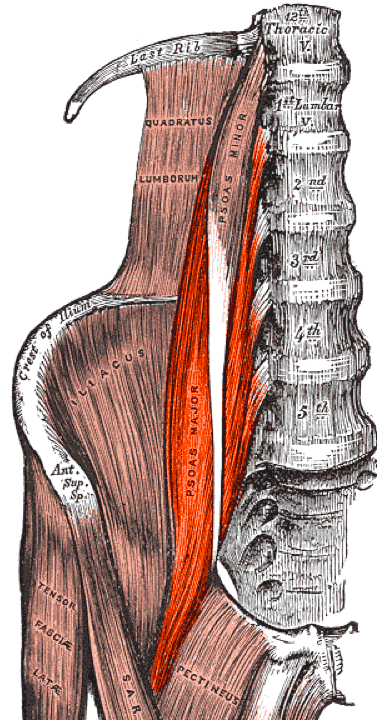
As a Yoga teacher of nearly 40 years, I am well acquainted with the ongoing challenges of tight psoas muscles. I also have had a front seat view of how stretching will not relieve psoas tightness.
This is because the nervous system controls the tension and response of the psoas muscle, and stretching will not change the habits of the nervous system!
Stretching Can Relieve Psoas Tightness Temporarily
Yes, I am saying stretching will not relieve psoas tightness, but there is a caveat. Stretching can loosen and relax the muscle for a short time, providing a relief from discomfort. But, as soon as normal habits of movements kick in, the relief will be gone.
Habits of movement are controlled by your nervous system. So, if you want to relieve psoas tightness, you have to address your habits of movement. This can get complicated because many of our movement habits developed to protect us both physically and emotionally.
If your psoas keeps tightening, something is unstable or compensating in your movement or in your emotional brain.
Psoas Tightness Can Be Held Stress or Trauma
When we are unable to release a traumatic event, this muscle can remain contracted, signaling the nervous system to always be on alert and ready to fight or flee. You may feel this as exhaustion in your body, as tight hips, a painful lower back, or pelvic floor.
You may try to relieve this discomfort by stretching, but the emotions woven into the psoas tightness can erupt. Memories or difficult emotions can emerge. It’s best to go slowly and kindly.
Moving Gently and Consciously Can Relieve Tightness and Emotional Pain.
Instead of stretching to relieve psoas tightness, think about how your hip might gain more mobility WITHOUT stretching. I know, this can be an odd concept. But let’s try something:
Lie on your back on the floor with your knees bent. When you do this, you help place your psoas in a more neutral position. Now, look at your knees. Do they stay facing the ceiling, or do they wander out to the side? If they wander, that is a sign of a psoas overworking. You can also notice how far your lower back is from the floor. A larger arch can indicate psoas tightness.
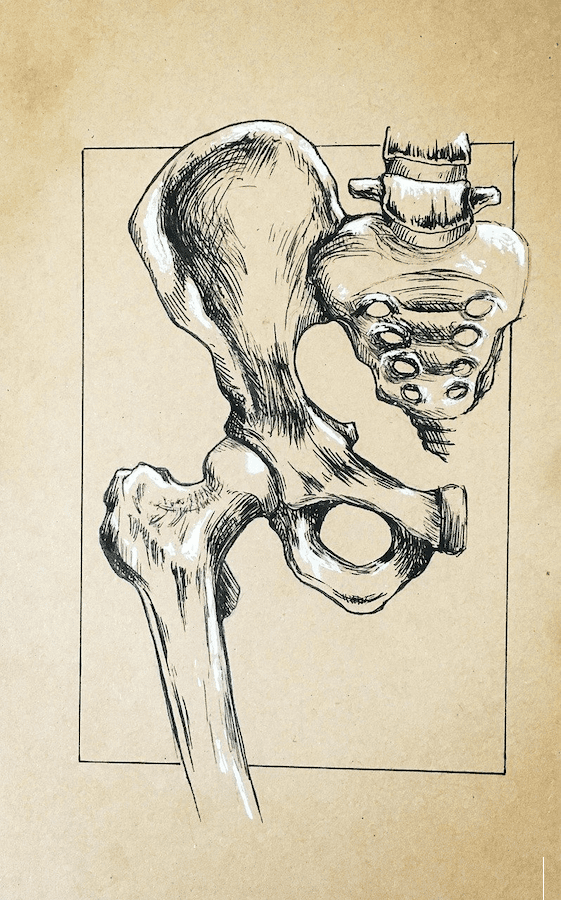
Pick one hip to work with first. Can you make a very small movement of the knee out to the side while picturing the movement of your hip joint? Here is a picture of the hip joint ball and socket to help. The psoas crosses this joint.
Make the movement very tiny, going for smoothness. Don’t push. Do it 10-15x and FEEL what is happening. When you rest, the chances are you will feel some psoas relief! If not, spread your feet wider and try moving in towards your center. Try the other side!
Rest after each investigation. Finally, move inward and outward in a continuous flow. Rest. Observe where your knees are now. Feel the distance between your lower back and the floor,
Less Muscle Tension and Easy Breathing Release the Psoas
Notice how you feel after this exercise. Most people feel much looser. Their arch softens. Breathing feels fuller and has less effort.
Through ligaments and fascia, our psoas is connected to our breathing diaphragm. Positive changes in your breath can also soften this important muscle.
Sometimes, some tears may arise from the above exploration, but typically, they are easy to manage. They may even be welcome. Tears are a chemical and emotional release.
If the emotional experience is overwhelming, do less. Or better yet, work with a trusted somatic movement therapist. Having an experienced guide can help you recover in a gentle and easy-to-process way. A link to working with me is below.
Learning to Walk Well Can Relieve Your Psoas Tightness
Walking is a great exercise and therapy. Many physical anthropologists believe that walking is what the human body evolved ot spend the majority of time doing! It’s also a great way to gain perspective on our lives.
In this video, you can learn how the Psoas Major Muscle swings your leg and helps alleviate “catching” and pain in the hip joint. Discover how you can relieve hip pain with a simple somatic movement and embodiment exercise.
There is a new model for pain relief and physical and mental health that is revolutionizing the way we think about movement. Embodiment and Somatic movement can help relieve chronic & acute pain and aid the healing process from injury.
If you need help or resources for your psoas, Keep reading
I offer One-on-one grief and trauma recovery sessions over Zoom, and in person in Florence, MA. group classes are available over Zoom. Often, classes are specific to the psoas.
The Conscious Breathing Course is a self-paced, at-home practice to improve your breath.
I also have ongoing walking workshops and one-on-one sessions. Walking well is crucial to the PSOAS! This:Yoga, Somatics, and Walking Playlist on YouTube offers more resources.
Share this post:
Share on X (Twitter)Share on FacebookShare on LinkedInShare on WhatsAppCategories
